News

Rooley Moor Neighbourhood Forum Annual General Meeting – 30 Jan 2026 at 7pm

Rooley Moor Neighbourhood Forum – Annual General Meeting

You are cordially invited to attend our Annual General Meeting on Friday, 30 January 2026, starting at 7:00pm.

This year’s meeting will be held online via Zoom and will last approximately 30 minutes. The meeting link will be circulated a few days beforehand.

Agenda

    1. Welcome, Introduction & Apologies
    2. Code of Conduct
    3. Conflicts of interest and conflicts of loyalty
    4. To approve the Minutes of the Annual General meeting of 2024 and review the actions from this meeting.
    5. To adopt the Accounts for the year ended 31st August 2025, and
      • To agree our reserves policy
    6. Legal & Administrative Information
    7. To approve the Reports from Trustees and Officers of the Forum
    8. Trustee & Officer Rotation, Resignations and Appointments
    9. Policy Update
    10. AOB
      • Scout Moor II Wind Farm update
      • Fund raising.
    11. Next Meeting – TBA

Please let us know if you would like to be more involved.

As a local charity we are looking for new trustees to join at our AGM. We particularly want to hear from local people with the time, interest and skills who can help our charity meet its objectives.

For more information please email the Forum Secretary at: info@RMNF.org.uk

PRESS RELEASE – 14 November 2025

Increased Risk of flooding for “Rochdale’s Chernobyl” from the proposed construction of Scout Moor 2

Following recent National Press coverage in the MailOnline of the problems at the old Turner Brothers Asbestos (TBA) Site in Rochdale, we are highlighting the potentially catastrophic health risks that could be caused by flooding of the TBA site brought on by Cubico’s proposal to erect 17 x 180m turbines on ancient peat moorland.

Turner Brothers Asbestos (TBA) in Rochdale started operating in the nineteenth century. The company’s industrial-scale production of asbestos cloth and yarn meant they processed a variety of asbestos types to create their goods, though Chrysotile is noted as being the most common type found in buildings. The company also handled blue (Crocidolite) and brown (Amosite) asbestos which were banned in the UK in 1985. Through the years, their products included:

    • Chrysotile (white asbestos): The most common type of asbestos, used for products like insulation, and in textiles like cloth and yarn.
    • Blue asbestos (Crocidolite): Used in cement products, insulation, and brake linings. The use of this was banned in the UK in 1985.
    • Brown asbestos (Amosite): Used in cement products, pipe insulation, and as a fireproofing agent. The use of this was banned in the UK in 1985.

TBA – later Turner and Newall – was the world’s largest asbestos company and owned mines in Canada and southern Africa alongside its factories in the north of England, where the mineral was processed into a spun yarn, cloth, and other asbestos-containing materials. The dangers of the mineral were unknown when it first opened in the mid-Victorian era, but in 1924, employee Nellie Kershaw became the first person in the UK to have been found to have died from asbestosis. She died on March 14, 1924, aged just 33 years. Her death led to the Asbestos Industry Regulations 1931, the world’s first laws relating to the mineral.

The manufacture of asbestos began on the site in 1879. By 1970 the factory had an annual output of 2,250,000 yards of asbestos cloth and 5,500,000 miles (8,900,000 km) of asbestos yarn. During production in the 20th Century, asbestos was allowed to enter the atmosphere around the factory by way of extractor fans which extracted dust from the factory floor. The factory produced tonnes of asbestos waste each week which had to be disposed of. Even though the site at Rochdale has long since been closed and the manufacture of any asbestos containing products stopped in the 1990’s, the legacy of the TBA factory in Rochdale continues to cause fear for residents who worry about the amount of asbestos left on site and in the surrounding area from the many years of production.

Most asbestos materials were banned in the UK in 1985, with a complete ban following 14 years later. The firm went out of business in 1998. The land in Rochdale, which housed TBA, was bought by ESG Trading. ESG chairman Martin Greenwood said it would ‘decontaminate, demolish and remediate’ the 111-acre site before putting forward any plans for it. Planning applications to build 600 homes on the land were thrown out by Rochdale Council in 2011 following a six-year battle by campaigners who feared people’s health could be put at risk. Three developers have come and gone since then and the current site owners, Spodden Park Ltd, are again planning to redevelop the area. Local residents and campaign groups, such as ‘Save Spodden Valley’, remain concerned about the health risks associated with any disturbance of the site during any future development. They advocate for complete transparency and rigorous independent testing. It is the remains of this industry which worries residents today. Asbestos waste was buried on site and allowed to contaminate the area surrounding the factory. Locals fear that any disturbance would expose current and future residents and visitors to asbestos.

Increased risk of disturbance by flooding

If the former TBA site flooded, a major concern would be the potential disturbance, uncovering and spread of buried asbestos waste, which could both during and after a flood release microscopic fibres into the air and water. This could have severe health implications, as inhaling asbestos fibres is a major cause of respiratory diseases such as asbestosis and mesothelioma. If the Scout Moor 2 wind farm application was approved, the risk of flooding would increase significantly. Increased flooding risk for the former TBA site (now part of the broader Spodden Valley area in Rochdale) would primarily be through the proposed excavation of the upland peatlands for wind turbine and other ancillary installations, road building for access over peatland, and decommissioning activities after the wind turbines’ approximate 25-year lifetime, all of which involve major drainage and excavation of deep peat. This would not only affect the peat’s carbon sequestration capacity, releasing carbon stored in these blanket bogs over millennia, but would also negatively impact biodiversity and ecology, harming and driving away wildlife from our local blanket bog ecosystems forever, and would cause disruption to the local terrain’s hydrology and essential water cycles, resulting in loss of flood resilience for our communities.

Key concerns about flooding risks

Risks identified by campaign groups and local residents include:

    • Peatland Damage: Peat acts as a natural sponge, absorbing and storing vast amounts of water and releasing it slowly. Digging up the peat for concrete foundations and other infrastructure would compromise its natural water management functions, leading to faster surface water flow and increased runoff after heavy rains.
    • Climate Change: Ecosystems like peatlands absorb large amounts of carbon dioxide, which is how peatlands, like the rainforests, are helping to mitigate climate change and reach net zero. Peatlands are the world’s largest natural asset on land for carbon capture with more than twice the carbon stored in all the world’s forests . . . and four times as much as in the atmosphere. Our globally rare blanket bogs on this proposed Scout Moor 2 site contain large amounts of carbon which, when disturbed, massively contribute to greenhouse gas emissions. Just one hectare of peatland can contain 5,000 tonnes of carbon that starts to be released into the atmosphere when wind turbines are installed. The recently produced Natural England Peat Map evidences that this area proposed for Scout Moor 2 contains some of the deepest peat in England. The deeper the peat, the more carbon will be emitted during construction, which also rapidly decomposes the peat and creates large holes in the land. As the surrounding peat drains into the holes, the peatland dries out and is irreparably destroyed, huge quantities of carbon dioxide are released and scope for unprecedented local disasters is created including increased frequency and intensity of extreme weather events, such as heavy rainfall, rising water levels, peat bog slides and flooding.
    • Altered Drainage: The construction of miles of access roads and massive turbine bases would disrupt and block historic and natural water balance would increase the volume and speed of water reaching downstream areas, such as the TBA site in the Spodden Valley.
    • Increased Surface Water Runoff: Replacing absorbent alkaline peatlands and with acidic materials and hard surfaces (concrete for turbine bases and compacted aggregate for roads) reduces the ground’s ability to soak up water, leading to faster and greater surface water runoff.
    • Downstream Impact: This wind farm’s construction is proposed on upland peat moors, which naturally attenuates water flow to the communities below. Any development that disrupts this natural hydrological process can increase flood risk for downstream urban areas. The former TBA site is situated downstream in the valley alongside the River Spodden, making it vulnerable to and at risk from any changes in the upstream water flow dynamics.

Potential effects of flooding

    • Disturbance of waste: It is a significant environmental and public health concern that flooding could erode the soil covering buried asbestos waste, causing the material to break up, scatter, and release hazardous fibres into the environment and air. This risk is heightened by factors such as climate change, which increases the frequency and severity of extreme weather events.
    • Release of fibres: The water could carry the waste to new locations, and if the material dries out, it could release airborne fibres that are then carried by the wind.
    • Contamination of water sources: Water runoff could carry asbestos fibres into local drainage systems, rivers, and potentially underground aquifers, contaminating drinking water supplies.

Health implications from disturbance of asbestos

    • Inhalation of fibres: The most significant health risk is the inhalation of asbestos fibres, which can lodge in the lungs and cause serious long-term health issues.
    • Respiratory diseases: Inhaling asbestos can lead to:
      • Asbestosis – a chronic inflammatory lung disease that causes scarring of lung tissue leading to permanent lung damage.
      • Mesothelioma – a rare and aggressive cancer of the lining of the lungs, abdomen, or heart.
      • Lung cancer.
    • Long latency period: Symptoms of asbestos-related diseases can take many years, even decades, to develop.
    • Irritation and inflammation: Short-term exposure can cause irritation and inflammation of the eyes, nose, and throat.

The developer, Cubico, has stated that it is proposing a major moorland restoration scheme as part of the project, focusing on rewetting the moor and restoring native vegetation to improve habitats and reduce flood risk for surrounding communities. However, it takes 1000 years to create 1 metre of peat and, as these are ancient peatlands, local peat has been forming since the last ice age – around 10,000 years ago. Peat is an irreplaceable, non-renewable resource and local peatlands are some of our most valuable national assets and are of international importance. Our globally rare blanket bogs play a vital role in protecting local communities in so many ways. They contribute to a healthier and more resilient environment, including by reducing flood risk and improving water security. Long-term environmental degradation and increased flooding would be a major concern if the Scout Moor 2 planning application were to be approved.

More information on local concerns can be found through groups such as the Say No to Scout Moor 2 campaign and the Rooley Moor Neighbourhood Forum. The official planning documents, including detailed flood risk assessments, are being considered by Rochdale and Rossendale councils as part of the planning process. The Lancashire Flood Forum has posted a strong objection to Scout Moor 2. It states: ‘the submitted evidence overall lacks the detail the Lead Local Flood Authority requires at this full application stage to demonstrate how the development will meet appropriate standards and comply with national policy and guidance.’

Useful Links

Say No To Scout Moor 2: https://saynotoscoutmoor2.org.uk/

Rossendale Council – Scout Moor II Wind Farm Planning Application: https://publicaccess.rossendale.gov.uk/online-applications/applicationDetails.do?keyVal=SZ0U9GND05V00&activeTab=summary

Rochdale Council – Scout Moor II Wind Farm Planning Application: https://publicaccess.rochdale.gov.uk/online-applications/applicationDetails.do?keyVal=SYTLVNNB01000&activeTab=summary

Daily Mail Article

Families living in the shadow of ‘Rochdale’s Chernobyl’ say they are plagued by urban explorers and fly-tippers taking advantage of the asbestos-ridden eyesore, 9th November 2025, https://www.dailymail.co.uk/news/article-15269391/Families-Rochdales-Chernobyl-urban-explorers.html

Save Scout Moor Peat Bogs Petition

New Petition Launched by Local Resident

Sign the petition here:

Save Scout Moor Peat Bogs and Stop the Massive Wind Farm That Is About To Destroy It.

The following is taken from Change.org:

I am starting this petition as a concerned resident about something which appears to be a local issue but will have consequences for us all.

I live in north west England and we are currently surrounded by 3 wind farms. Planning permission has been submitted for an extension of the Scout Moor wind farm (Scout Moor 2) on the historic Cotton Famine Road, between Rochdale and Rossendale.

The proposed extension to the wind farm would be 17 or 18 new turbines so 43 or 44  in total for this wind farm alone. Each one of these new turbines would be twice the height of the existing turbines, making each one taller than Blackpool Tower.

At present the area is a large peat bog which would be destroyed and the carbon dioxide it currently holds would be released into the atmosphere. To support these massive structures enormous concrete bases would have to be installed with a colossal cost to the environment and new roads built to service the turbines.

All this development would also affect all the animals and birds which live on the moors and the many water courses which run across these hills to fill our reservoirs.  It is very controversial whether there could  possibly be any overall benefit from all this destruction, more likely it will do more harm than good.

In recent months some politicians have started to re-evaluate the benefits of wind farms as environmentally friendly and effective sources of electricity but this Labour government is desperate to reach “net zero” by 2030 and so our local politicians are backing this aim. Don’t let this happen before a government about turn because by then it will be too late.  This planning permission was refused in 2017 for good reason ~ please sign this petition to stop this destruction.

Thank you for signing please share as far and wide as possible.

You can sign the petition here: Save Scout Moor Peat Bogs and Stop the Massive Wind Farm That Is About To Destroy It.

Please watch this YouTube video

Note from RMNF

Some councillors appear to believe there is less opposition to Scout Moor 2 than to previous applications. This is difficult to understand – it’s the opposite of what we’re seeing on the ground.

We suspect many residents feel disempowered, believing objections are futile because Scout Moor 2 is being presented as a done deal. Yet frustration is growing. Many people are increasingly angry that both Rochdale and Rossendale councils seem determined to push this application through – regardless of the environmental cost, the impact on local amenity, or the consequences for our energy bills.

And it’s not just here, over the way in Calderdale there is massive opposition to the Calderdale Energy Park application, you can sign their petition to ban development on protected peat here.

Find more information at https://saynotoscoutmoor2.org.uk/

Do write to your councillor directly and let them know you are against this proposal and please copy us in at info@saynottoscoutmoor2.org.uk. You can find the full list of local councillors here.

Date for your diary

We’re holding another drop-in session at the Methodist Church in Norden on Thursday 27th November 2025, early evening.

Everyone’s welcome – especially if you currently support the proposal. If you feel strongly, come and tell us why. What are we missing?

Get involved

We have written a brief guide to WHAT YOU CAN DO TO HELP US which includes a variety of actions that you can take now, including how to make a donation to support our campaign.

PRESS RELEASE – 29 October 2025

Major failures in local planning mean homes could be left uninhabitable1

Noise consultant identifies major health risk to local inhabitants due to Cubico’s proposed Scout Moor 2 windfarm development

The planning application for Scout Moor 22 is fundamentally flawed, deliberately manipulating a broken planning process, resulting in a risk to our health, wellbeing, climate, environment and heritage. It must be stopped. Here is why:

What even is the application? The applicant, Cubico3, want to install up to 17 turbines, each larger than Blackpool Tower, on Rooley Moor. Government planning advice4 requires a worst- case scenario to be evaluated, but Cubico are using this process to sidestep the need to be specific about their plans, in an attempt to rush through the development before the political mood changes.  We don’t know what turbines they want to install, we don’t know how noisy they are, we don’t know how efficient they are… there are simply too many unanswered questions for there to be a proper consultation.

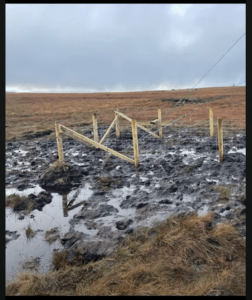
Peat, peat, peat… The proposed development is on deep peat.  The LPAs know that, the applicant knows that, everybody knows that.  At least 140,000 cubic meters of peat (equivalent to 1,275 double decker buses) will be replaced by concrete if this scheme goes ahead.  This is the equivalent of around 30 sq km of rainforest! This also contravenes the LPAs own policies5 by a huge margin (which, sadly, we’ve already seen Rossendale Council do with Cubico’s recent meteorological mast approval). The policies to protect peat are there for a reason – it is good for us – it holds carbon, it holds water and prevents flooding, it is a natural habitat for a wealth of things that are good for our ecology.  You can see the damage that has been done to deep peat just installing the meteorological mast6.  The LPAs continue to demonstrate their inability to enforce planning rules even on this small and relatively simple development.

Experimenting with Residents’ Health – These would be some of the largest and most densely sited turbines in England, and the closest to residential dwellings.  It is clearly proven that turbine noise and shadow flicker are damaging to health.  Why is it ok to put Rochdale and Rossendale residents at risk?

Planning and Noise Expert Melvin Grosvenor, founding member of the Independent Noise Working Group, says “… should the proposed 180 metre turbines be consented, some of the homes in this local area will be at EXCEPTIONALLY HIGH RISK of being uninhabitable

Amenity – Yes, we all know we’re not entitled to a view, but we are entitled to want to protect this beautiful countryside, our shared heritage, and our shared common land.  Elsie Blundell MP herself highlighted the importance of the Cotton Famine Road7 on Rooley Moor in her maiden speech in Parliament. This development will harm national trails and change the landscape forever.  Previous failed applications here have already been rejected for good planning reasons, including cumulative impact.

Conspiracy? The LPAs are ignoring their bill payers – the MPs are not addressing their constituents’ concerns, the Councillors are ignoring their electorate. Party politics and local council budgets8 are driving decision making to all of our detriment.

Whilst Cubico say this will generate “enough to power over 100,000 homes each year”, we say this generation is at enormous public cost9, and it will not power any homes when the wind isn’t blowing.

ACT NOW

We need your help to uphold processes, ensure policies are adhered to, ensure our elected Councillors and MPs are acting on our behalf, and to protect the moorland.  Find out more and sign up to get involved at https://saynotoscoutmoor2.org.uk/, or join us in Norden on 27 November 6pm to 8.30pm, at Norden Methodist Church.

For more information, press only:

Say No to Scout Moor 2: Steve Davison, info@saynotoscoutmoor2.org.uk,  07785 957 071

Rooley Moor Neighbourhood Forum CIC: Alan Rawsterne, info@rmnf.org.uk, 07970 715 904

Useful Links:

https://saynotoscoutmoor2.org.uk/

https://www.rmnf.org.uk/

Rochdale Council’s planning application consultation: Rochdale Consultation
Rossendale Council’s planning application consultation: Rossendale Consultation

Footnotes:

  1. Wexford wind farm must pay almost €1m towards legal costs of couple who won noise nuisance case
  2. Rochdale Council planning application reference “25/00680/FUL”, also on the Rossendale Council planning site: “2025/0267
  3. Cubico UK Development (Wind 1) Limited, Company Number 15860283, is a newly incorporated company with no assets – it is part of a complex series of holding companies that make up Cubico’s investment and tax avoidance structure – with profits ultimately going to an teachers’ pension fund in Ontario, Canada.
  4. Cubico say that their application is being made under the “Rochdale Envelope” approach (Nationally Significant Infrastructure Projects – Advice Note Nine: Rochdale Envelope – GOV.UK) – which is designed to assess a worst case scenario when a scheme has not been fully designed, in order to accelerate obtaining planning permission. This should be transparent before and throughout the consultation, but it has not been mentioned, not even once, in the planning application or the Local Planning Authority communication with the consultees.
  5. An example of one of the policies the application contravenes, ENV7 prevents development on deep peat over 40cm. The majority of this development is on peat much deeper than 40cm
  6. Horrifying destruction of peat by Cubico
  7. Cotton Famine Road: https://www.rmnf.org.uk/area/cotton-famine-road/
  8. Rossendale Council have already accounted for the income from this development in their budgets, thereby giving the appearance of having pre-determined the outcome of the application
  9. The UK’s industrial electricity is by far the worlds’ most expensive, domestic is second highest in Europe

Cubico’s Peatland Destruction Exposed

Horrifying Destruction of Peat by Cubico “Sustainable” Investments

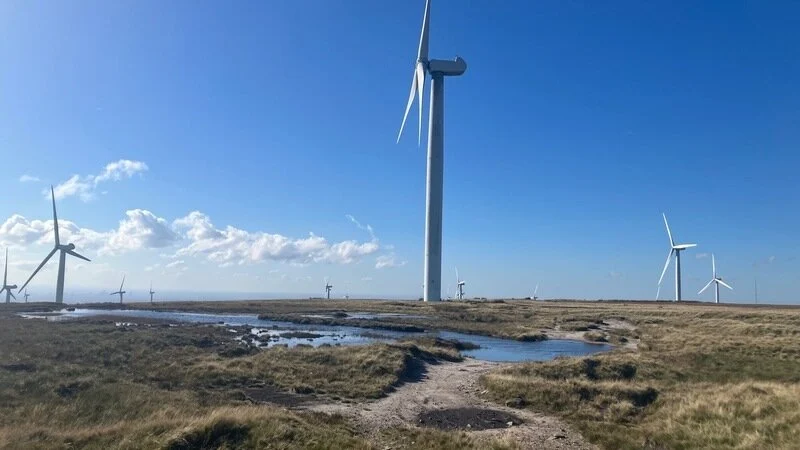
This video shows the before-and-after situation at Top of Leach, where Cubico Sustainable Investments recently erected a Metrology Mast to gather data in support of their planning application for Scout Moor 2 Wind Farm – a proposed expansion of the existing 27 turbines (each 100m high). The new proposal includes 17 turbines at 180m high, spanning Scout and Rooley Moors and intersecting the historic Cotton Famine Road.

The footage highlights a stark contrast between Cubico’s public commitments to sustainable development and the environmental impact of the mast installation. Observers have raised concerns that the works breached several planning conditions, most of which remain unresolved, and failed to uphold responsibilities to protect the moorland and its wildlife.

It’s often said that actions speak louder than words. In this case, Cubico’s conduct has drawn criticism from local residents and campaigners, who describe the approach as cavalier and lacking in transparency or accountability.

If this is the scale of disruption caused by a single mast, imagine the consequences of constructing the full wind farm – potentially involving the excavation of between 130,000 and 200,000 cubic metres of peat, a carbon-rich habitat of national importance.

Help stop the 180m Turbines on Rooley Moor – Here’s How:

Submit your objection to Rochdale Council.

Submit your objection to Rossendale Council.

To  donate, please visit our Crowdfunder page

For more information see SAY NO TO SCOUT MOOR 2

Help Stop 180m Turbines on Rooley Moor

Submit Your Objection Today

We urgently need your help to oppose a planning application that threatens to irreversibly damage Rooley Moor and the surrounding moorland we all cherish.

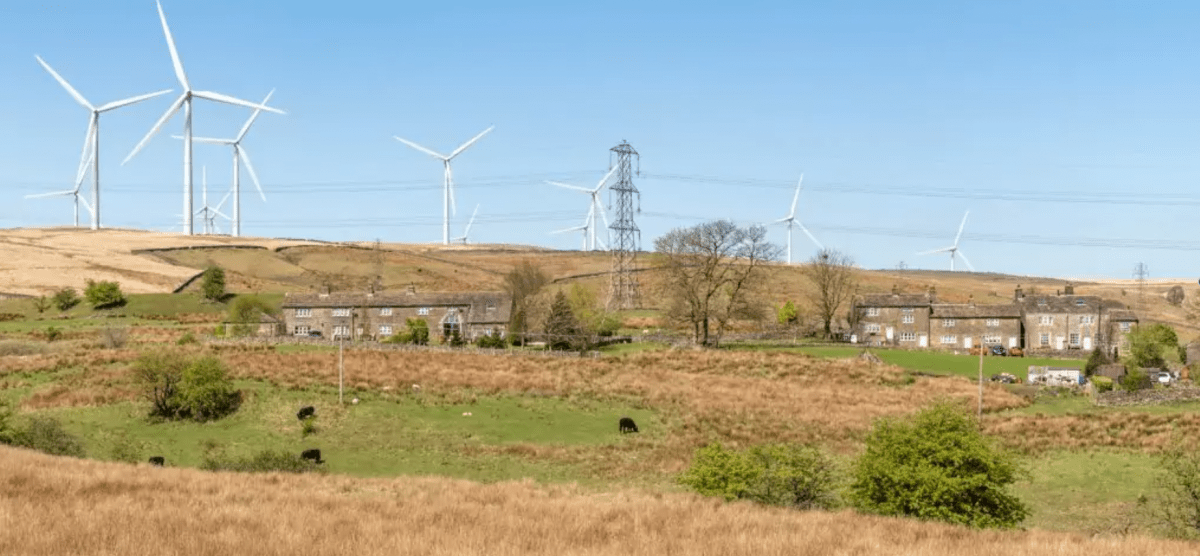
The Scout Moor 2 Wind Farm proposal seeks to install 17 industrial-scale wind turbines, each 180 metres tall – taller than Blackpool Tower – across Rooley Moor and alongside the historic Cotton Famine Road. These structures would dominate the skyline and permanently alter the character of this cherished landscape. Visualisations from the planning application can be seen here: https://saynotoscoutmoor2.org.uk/visualisations-from-the-planning-application/

If approved, this development would cause irreversible harm to:

    • Green Belt & Common Land and protected moorland habitats, undermining protections meant to preserve open countryside.
    • Heritage landscapes, including sites of working-class and social history significance such as the Cotton Famine Road.
    • Peatlands, vital carbon stores that would be excavated and replaced with concrete and other alien materials, releasing stored carbon.
    • Public access and recreation, with impacts on footpaths and open access land.
    • Water management and peatland integrity, risking long-term environmental degradation, flooding and local water resilience.

Recent reports suggest that poorly planned wind developments may contribute to rising energy costs Wind farms to blame for rising energy bills, says Ofgem.

This proposal prioritises private commercial interests over public benefit, disregarding national and local planning protections – especially those safeguarding landscape character, biodiversity, heritage assets, and public access.

What you can do:

Submit an objection to Rochdale Council.

Submit an objection to Rossendale Council.

Objections must be submitted as soon as possible to be considered.

Share your concerns – mention impacts on landscape, heritage, biodiversity, access, and water. Personal stories and local knowledge make a real difference.

Example objections can be found here: https://publicaccess.rossendale.gov.uk/online-applications/applicationDetails.do?activeTab=neighbourComments&keyVal=SZ0U9GND05V00

Spread the word – encourage neighbours, walking groups, and local organisations to respond. Every voice strengthens the case.

For more information and resources, visit https://saynotoscoutmoor2.org.uk/

Please email info@RMNF.org.uk if you would like help submitting your objection.

Thank you for standing with us to protect Rooley Moor’s heritage, ecology, and public access. Together, we can ensure this treasured landscape is safeguarded for future generations.

SM2 Wind Farm Application Now Live

The Scout Moor 2 wind farm planning application is now live on Rossendale Council’s website.

The application number is 2025/0267 – see the following link –

https://publicaccess.rossendale.gov.uk/online-applications/applicationDetails.do?activeTab=documents&keyVal=SZ0U9GND05V00

Rossendale’s head of planning has advised:

  • The validation process for this and any application we receive is undertaken in accordance with RBC’s Validation Checklist and the National Validation Checklist.
  • Issues relating to the impacts of the development are assessed through the application process and if further information is needed to assess the proposal, it will be requested during the course of the application.
  • If deficiencies in the scheme are identified, they would have to be addressed to the decision taker’s satisfaction.
  • Any significant changes to the Environmental Statement will require re-consultation.
  • We have sent the application to the Secretary of State and await to hear whether the application is to be called in.
  • Consultation is likely to start in early September when the Case Officer returns from annual leave.

Now is the time to read, inwardly digest and consolidate efforts to defeat this wind farm application.

Please show your support and spread the word.

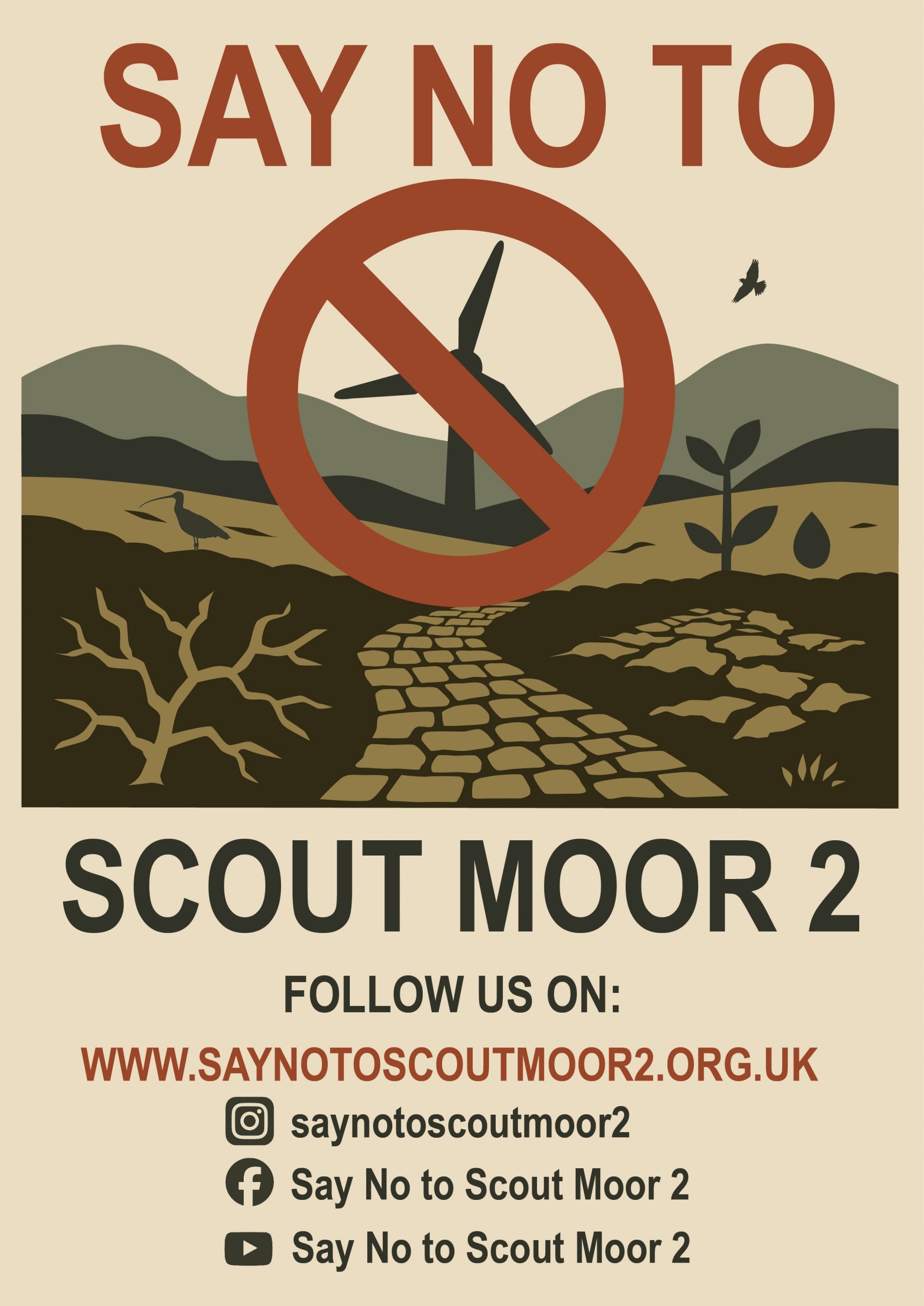
Please print the poster below and display it in a visible, lawful spot – your window, local noticeboard, or community centre.

Protect Rooley Moor – Display Our Campaign Poster

SAY NO TO SCOUT MOOR2

As part of our ongoing campaign to protect the heritage, landscape, and ecology of Rooley Moor, we’ve created a poster to raise awareness of the proposed Scout Moor 2 wind farm planning application, and the serious concerns it presents. Click HERE to print the poster.

Cubico Sustainable Investments have submitted a planning application (soon to be made public) for seventeen 180m-high turbines. This industrial-scale development will do nothing to advance Net Zero, improve energy security, or reduce energy costs. What it will do is irreversibly damage a landscape of national significance.

📌 What you can do

Please print the poster and display it somewhere visible—your window, local noticeboard, community centre, or anywhere it might catch attention. Every poster helps amplify our message and demonstrate the strength of local opposition.
Please do not fly-post (i.e. attach posters to public property such as lampposts, bus stops, or street furniture). These will be removed and may result in a fine. Let’s keep our campaign respectful and within the law.

🌿 Why it matters

Rooley Moor is a cherished and irreplaceable landscape. The proposed development threatens:

    • The historic Cotton Famine Road
    • Green Belt and common land
    • Biodiversity, including priority habitats
    • Heritage assets and public access
    • The integrity of deep peat, a vital carbon sequestration store

We appreciate that not everyone shares our perspective. But for those who do, your voice matters. Protecting Rooley Moor contributes more meaningfully to Net Zero than Cubico’s engineered proposal. This application must be robustly challenged, and visible community support is essential.

🖨️ If you’d like help printing the poster, just reply to this email and we’ll make sure one is printed for you.

Thank you for standing with us. We are stronger together – and together, we can protect what matters.

Best regards,

(on behalf of the Say No to Scout Moor 2 campaign)

Say No To Scout Moor 2

SAY NO TO SCOUT MOOR 2

29 July 2025 – Cubico’s Scout Moor 2 wind farm planning application is expected to be published just in time for the peak summer holiday season.

The Cotton Famine Road is no ordinary track

Carved by starving millworkers during the American Civil War, it stands not merely as a stone sett route, but as a living memorial – built from hunger, solidarity, and working-class resolve.

Now this historic landscape faces destruction

Cubico’s proposed Scout Moor 2 wind farm would industrialise Rooley Moor’s historic hills, scarring an irreplaceable heritage site in the name of greenwashing.

This is not renewable progress!

It is ecological vandalism dressed as virtue — doing nothing for carbon reduction or energy security, it simply enables corporate profit through higher energy costs.

Scout Moor 2 is the wrong project in the wrong place

True climate action respects what nature has to offer Nett-Zero, peat rich landscapes, history, and communities. Scout Moor 2 does not!

We owe it to those millworkers — and to future generations — to protect this place

To bury their legacy beneath steel towers, thousands of tonnes of concrete, and alien materials is not sustainability — it’s desecration.

Say no to greed

Say no to ecological vandalism

SAY NO TO SCOUT MOOR 2