News

The Importance of Peat

BBC Countryfile – Sunday 6th December 2020 – Black Mountains.

https://www.bbc.co.uk/iplayer/episode/m000q6r1/countryfile-black-mountains

39:25 minutes into the programme they highlighted:

  • 7 million acres of peatland in the UK providing a home to hundreds of plant and wildlife species.
  • The peatlands absorb vast quantities of carbon from the atmosphere.
  • Damaged peatlands release carbon into the atmosphere.
  • Damaged peatlands account for around 10% of the planet’s greenhouse gas emissions.
  • Preserving peatlands is crucial in the fight against climate change.
  • Black Mountains Land Use Partnership (https://www.blackmountains.wales)
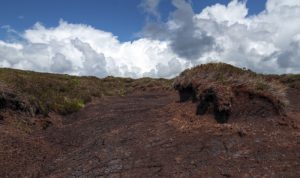
  • Th Black Mountains are a hotspot for illegal trial biking which is taking its toll on the delicate peatland soil.
  • Restoration is being lead by the Countryside Ranger and an Ecologist (Dr Paul Sinnadurai – https://www.researchgate.net/profile/Paul_Sinnadurai2)
  • In the UK 10 million tonnes of carbon dioxide are released each year into the atmosphere from damaged peatlands – so it’s critical to look after them.
  • Peat is really important because it locks in 5 times more atmospheric carbon than any other vegetation. It’s been doing that for thousands of years but where it gets exposed through the actions of footfall, livestock walking across it, illegal off road motorcycles ripping open the ground – we need to repair the damage to lock in the carbon.
  • What is peat? Undecomposed vegetation that is formed where sphagnum moss traps rainwater. The moss gets buried and buried and buried but keeps growing towards the sky and the rain, it gets trapped beneath its own growth and gets pushed underground over thousands of years and more vegetation grows on top.
  • To repair the peat Coir roll is used to slow water flow (https://www.salixrw.com/product/coir-rolls/) and the erosive power of water and to stabilise the peat.
  • Heather seed is then planted.
  • GeoJute is laid over the seed. (https://www.flexiblelining.co.uk/ground-reinforcement/erosion-control/geojute-erosion-control-rolls) The GeoJute is a biodegradable net that will eventually rot, it’s used to stabilise the peat and holds moisture so that in the summer the peat doesn’t completely dry out and it allows the seed to germinate.
  • Damaged peat not only releases carbon into the atmosphere, it affects ecosystem, the control of water flow and water quality.
  • Important habitat will be lost if we don’t tackle this problem.

2020 AGM Minutes

Our AGM was held online via Zoom on Thursday 12th November 2020

Circumstances of the AGM 

Due to Coronavirus restrictions the Government had given flexibility in the method used to conduct a Charitable Incorporated Organisation AGM. The Trustees decided to conduct the AGM by proxy, the AGM agenda and reports pack was published on our website, with additional reach being given through our social media platforms on Facebook and Twitter. Voting members of the forum were each sent an email that contained the AGM agenda and reports pack, a postal ballot form and a link to an online ballot that could be completed through SurveyMonkey. The results of the ballot were broadcast using Zoom video conferencing and each item on the agenda was commented upon.

You can read the AGM minutes HERE

2020 RMNF AGM

SAVE THE DATE!

Our AGM meeting will be online via Zoom on Thursday 12th November 2020, from 19:00 to 19:40 and a link to the meeting will be provided by email on the day of the meeting to anyone who wishes to participate.

Due to the public health emergency this year’s AGM will consist of the minimum statutory business and all voting will be by proxy. We will contact members who have voting rights and invite them to instruct the Chair to cast their vote. Or, if they wish they can leave the choice to the Chair.

Please see the attached meeting agenda and reports pack. You can get more details or make any comments by emailing: info@RMNF.org.uk

20201112 – RMNF AGM – Agenda and Reports Pack

Going Underground

Why soils are key for climate smart cities

Our thanks go to Professor David Johnson (Department of Earth and Environmental Sciences, The University of Manchester) for giving his permission to share the following video, which was presented at the Greater Manchester virtual Green Summit.

More details about the Greater Manchester virtual Green Summit can be found at: https://www.gmgreensummit2020.co.uk

Coronavirus Update

COVID-19

RMNF is following the UK Government’s advice and will not be organising any events until the crisis is over.

We are fortunate to live in a wonderful area and we all know nature can be a powerful force for good in difficult circumstances. Our moors provide space for us to exercise and enjoy the fresh air, they can inspire us, lift our spirits and educate us.

Spring is here and we hope you’ll be able to take the opportunity to enjoy it. Please remember it’s the season for bird nesting and lambing – so please respect the moors and those who try to earn their living from grazing sheep and cattle.

RMNF is a member of the NCVO (National Council for Voluntary Organisations) and they have made their online content free for all to use – see the Knowhow website.

The NCVO also provides helpful information about Coronavirus that you will find by clicking HERE.

Community is everything in a time of crisis, so please take the time to check on any elderly or vulnerable persons that you know of.

Onshore windfarm subsidies

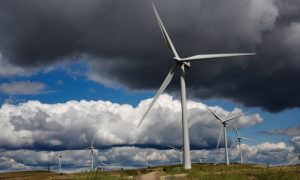
UK government lifts block on new onshore windfarm subsidies

Photograph: Murdo MacLeod/The Guardian.

On Monday 2 March 2020 The Guardian reports that four years after ministers scrapped support for new projects the UK has abandoned its opposition to subsidising new onshore windfarms.

For more information please click HERE.