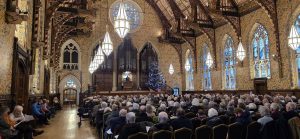
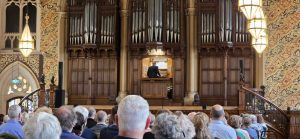
Every Wednesday at 12:30pm, enjoy the Queen’s Award-winning Toad Lane Concerts at the stunning Grade I listed St Mary in the Baum church, Toad Lane, Rochdale, OL16 1DZ.
Admission is just £6. As a “not for profit” initiative, your entry fee and donations directly support talented musicians, the historic venue, and music resources.
For details, contact Dr. Joe Dawson: 01706 648872.
Note: There have been 1,180 concerts since taking over the council’s Music at Lunchtime in 2001. Justifying continuity in Rochdale’s year as the Greater Manchester Town of Culture.
Doors open 12noon, concert starts 12.30pm – 1.30pm.
Wednesday 15th April 2026 – Lucy Farrimond soprano and piano (RNCM)
Here are the next events to whet your appetite.
Apr 22 – Johanna Leung clarinet (RNCM) and ChiChi Li piano (RNCM)
Apr 29 – Sinead D’Abreu-Hayling soprano (Welsh Academy, WNO & RNCM) – Róisín Fleming piano (MTU Cork School of Music & RNCM)
May 06 – Madeleine Brown piano (RNCM)
May 13 – Students from Chetham’s School of Music
May 20 – Eccles Community Choir – Director Angela Rowley (soprano and adjudicator) – Piano John Stott
May 27 – Elliot Gresty clarinets
Previous Performance Reviews.
Wednesday 8th April 2026 – Harmony Choir conductor Freda Farnworth (London Guildhall School of Music) – accompanist Graham Chamberlain.
The 1,180th lunchtime recital since taking over from the council in 2001 was ‘supercalifragilisticexpialidocious’. This key word from their Mary Poppins medley said it all.
The latest science states that singing in choirs is good for your health and wellbeing. It is also rather good for your audience. Here is a bunch of men and women who practise together for hours to bring good music to life to entertain us.
Local mixed voice choir, HARMONY was formerly known as Rochdale Retirement Choir as part of Rochdale Music Service. They have been independent for quite a few years now, meeting every week (in school term time) at St Aidan’s church on Monday between 1.00 and 3.00 pm. They welcome anyone who has an interest in singing.
Conductor Freda Farnworth is herself a distinguished soprano soloist. Educated at Chetham’s School of Music in Manchester and a graduate of the Guildhall School of Music and Drama, London, Freda is a well-established singer, teacher, producer and conductor and clearly has brought on her choristers well.
The able accompanist today was retired teacher Graham Chamberlain, who was born in Essex but has lived for many years in Rochdale. He is an active committee member of the Oldham Rochdale and Tameside Organists’ Association. Among his other interests, he enjoys singing and is a keen Rochdale Football supporter.
Their varied programme began with a set of charming light music arrangements: I Got Rhythm by Gershwin, Tea for Two by Caesar, and Let’s do it by Porter. This was an upbeat start before turning to the more serious and reflective motets by Stanford, which were very moving.
Then to the cinema and the West End for a jolly Mary Poppins Medley by Sherman & Sherman arranged by Huff. Just in case the excitement became too much Wiegenlied by Brahms and The Long Day Closes by Sullivan calmed our spirits before the hilarious Ill Wind by Flanders and Swan, which made irreverent puns to Mozart’s Horn Concerto. Finally, Prayer (Hansel and Gretel) by Humperdinck brought us calmly to a peaceful close.
The audience included Emma Wild with colleagues and members from Rochdale Carers, who all thoroughly enjoyed it.
With thanks to Dr. Joe Dawson for permission to publish his article.
ORTOA (Oldham, Rochdale and Tameside Organists’ Association) was established in 1908. Latterly it has been made up of organists and music aficionados to support music in the area.
The organ in the town hall is renowned internationally. The committee consists of volunteers who, with the council officials, develop concerts by leading exponents to make the most of it.
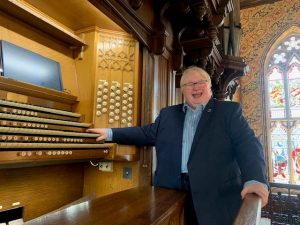
Jonathan Scott is one of the leading organists of his generation and has charge of the Bridgewater Hall instrument amongst other accolades. He is the Honorary President of ORTOA and he also arranges concerts in his own right. More information at www.jonathanscott.co.uk
Tuesday 19 May 2026, 1 pm – Alexander Woodrow (Leeds Minster)
ORTOA tour of Middleton – Saturday 14th March 2026
Organists at large … in Middleton
In a week when there was much media attention to pipe organs becoming an endangered species, organists were at large in the borough – Middleton to be precise.
ORTOA (Oldham, Rochdale and Tameside Organists’ Association) has been supporting organ music in the area since 1908. They promote concerts, particularly the Rochdale Town Hall organ, where they even managed to present a recital in between ‘tiers’ during Covid when the rest of the country was silent! But they have also promoted others throughout their patch, particularly when the town hall was closed for restoration.
St Leonard’s Parish Church
Members also enjoy periodic ‘organ crawls’ where significant instruments are explored, scrutinised and played during a Saturday outing.
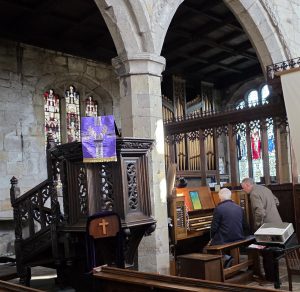
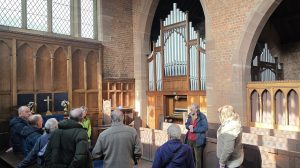
The latest of these ‘crawls’ was around Middleton, where the Parish Church (St Leonard’s, Grade 1 listed) has a truly notable historical presence high above the town since its ancient foundation in 1412. It also has a tremendous musical heritage, including an organ, which members relished trying out (1920 Rushworth & Dreaper; rebuilt 1965 by Pendlebury Organ Company, 3 manuals plus pedal with 30 speaking stops). Leon MacLeod proved be a genial encyclopaedic guide to the historic building and its fascinating contents; resident organist David Brocklehurst also advised and demonstrated.
A short stroll through the Jubilee Park led to the Long Street Methodist Church complex – church, school and lecture hall set around a garden (1899-1901) – a fine Arts and Crafts masterpiece by renowned local architect Edgar Wood (1860-1935), hosted by Christine Grime. The organ needs some renovation and care but is an interesting reminder of the variety of instruments suited to their surroundings (original Peter Conacher & Co, Huddersfield, overhauled 2002, 3 manual and pedal with 23 speaking stops).
Long Street Methodist Church
Following a tasty repast next door at the Old Boar’s Head Pub (1622) the intrepid organists rounded off their crawl at the more recent St Michael & All Angels, Tonge, which was financed mainly by local brewery JW Lees, begun in 1901 and completed in 1931.
Members were delighted with their Middleton tour; as one of them said, ‘It brings to life the richness of heritage around us that we drive through day by day, wearing blinkers.’
New members are always welcome, contact Barrie Brailsford on 01706 343163.
With thanks to Dr. Joe Dawson for permission to publish his article.
Previous ORTOAPerformance Reviews.
Concert at Rochdale Town Hall Saturday 28 February 2026 – Ronny Krippner (Ripon Cathedral)
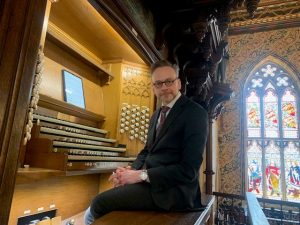
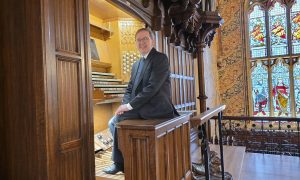
Dr Ronny Krippner was appointed Director of Music at Ripon Cathedral in 2022. Born in Bavaria in 1980 he studied organ in Regensburg while at the same time working as Assistant Choirmaster of the ‘Regensburg Cathedral Sparrows’, the Cathedral’s famous boys’ choir.
He took his master’s at Exeter University UK whilst singing in the Cathedral Choir as a Choral Scholar. In 2005 he became Organ Scholar at Bristol Cathedral, Organist at Clifton College and a member of staff at Bristol Grammar school. After a period at Newport Cathedral, Ronny held several such posts in London.
Ronny has made organ improvisation a specialism, for which he has won many accolades; he was Specialist Tutor for Organ Improvisation at the Royal Birmingham Conservatoire and in 2019 gained a PhD with a thesis on the subject from Birmingham City University. Ronny has recorded several CDs with organ and choir music and performed on television and radio in Germany and the UK.
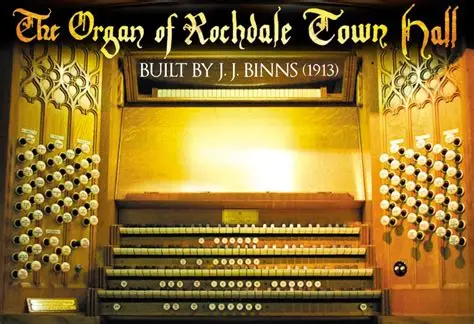
So, Rochdale’s magnificent JJ Binns instrument was in good hands (and feet). In his pithy and helpful introductions Ronny described it as ‘absolutely amazing.’
Guilmant’s Finale from Sonata No 1 was a splendid opening, quickly establishing both player and the composer’s late Romantic style ideal for the instrument.
Mozart’s only surviving piece for organ, Piece for a Musical Clock K594 was mainly sombre and reflective as it was a funereal piece, yet Mozart’s playfulness and Classical charm surfaced for moments such as with references to his comic opera Cosi fan tutte.
Stanford’s Fantasia and Toccata in D minor, brought us back to the late Romantic sound world as with pieces from Widor’s Symphonie Gothique Op 70.
Finally, Ronny’s own improvisations provided a tantalising glimpse of the art of the organist. Not only must they adapt quickly to each individual instrument’s foibles but be quick witted enough to extend or provide seamless musical accompaniments to the needs of the church service or occasion. He showed himself to be a master of this with his Thema and Variations on Handel’s March from Scipione, and Prelude, Adagio and Fugue on the tune MELITA (Hommage à JS Bach).
This programme proved to be a perfect match for player, instrument, venue …and audience, as the sustained applause that called him back to the stage demonstrated.
With thanks to Dr. Joe Dawson for permission to publish his article.
Concert at Rochdale Town Hall Saturday 31 January 2026 – Peter Kwater
Peter Kwater was born in Blackburn and became seriously interested in music at the age of 16, and went on to study Organ, Piano and Harpsichord at the RNCM with Ronald Frost and Gillian Weir.
Following graduation and two years as Organ Scholar at Liverpool’s Metropolitan Cathedral, Peter established his own teaching practice, combined with solo performing and accompaniment work, for which he is in great demand.
Peter has been choral director and accompanist with many local Northern choirs, such as St Helens Choral Society, as well as a teacher and accompanist for Wigan Music Service. He was Organist and Director of Music at St Bartholomew’s Rainhill, for 35 years and since January 2024 Director of Music at St George the Martyr, Preston, with its historic 1860’s Fr Willis organ!
He wittily referred to his programme as, ‘A Full English’ as he chose such composers, many of whom lived and worked through the ‘civic’ period of entertainment through organs just like the Rochdale instrument. It was also thoughtfully varied – an eclectic mix – and admirably suited to show off the town hall instrument’s characteristics. His wife Carol was the registrant and aided his page turning with their synchronized electronic tablets – a first for the town hall’s JJ Binns instrument.
He opened with Pean – A song of triumph by Soorjo Alexander William Langobard Oliphant Chuckerbutty, (London-born of Indian parentage) a.k.a. simply Oliphant Chuckerbutty or Wilson Oliphant – worth putting on any programme, for the name alone! A triumphal opener indeed, written by a composer who was a significant expert on church, theatre and cinema organ music and playing.
Continuing this theme, after an impressive display of full power, Peter explored solo orchestral colours and sweeter sounds in two characteristic pieces, Fountain melody and Chanson d’Espoir by John Arthur Meale (b. Slaithwaite 1880-1932) who combined his ecclesiastical work at London’s Westminster Central Hall with over 600 civic performances including Saturday Popular Concerts – not unlike today.
Another contrast came with modern styles in Processional by Grayson Ives (Oxford organ scholar and an original Kings Singers member); followed by a delightful Canzona in Bb by the blind from birth musician, William Wolstenholme (b. Blackburn,1865-1931).
Two more attractive pieces by Nicholas Choveaux (b. Bromley 1909-1995) led to the resounding Triumphal March – by another renowned blind organist, Yorkshire composer Alfred Hollins (nicknamed ‘Alfred the Great’ by WT Best). Beginning and ending in triumph a carefully planned and well executed demonstration of civic organ music on one of the best surviving instruments in the country.
A charming little encore by William Russell, with its Early Romantic clarity, refreshed and enriched the palate to complete a rich and varied ‘Full English’.
The event was tinged with sadness with the news that Manchester-born Nigel Ogden, renowned organist and presenter of BBC Radio 2’s popular series ‘The Organist Entertains’ for over 38 years, passed away suddenly on the morning of last Tuesday 27th January, aged 71. He would have loved it.
With thanks to Dr. Joe Dawson for permission to publish his article.
Concert at Rochdale Town Hall Wednesday 17 December 2025 – Jonathan Scott Christmas Organ Concert
This was not just any Christmas concert. This was a Jonathan Scott organ spectacular especially for the season … and there was no room at the inn.
In what has become an annual tradition, once more the Great Hall was packed out, having been sold out several weeks previously. If you missed it, you could view it on their Scott Brother Duo YouTube channel, which attracts 100 million views.
Over one hundred years ago this magnificent instrument by James Jepson Binns (donated by Alderman Sir Samuel Turner JP) made its debut on the visit of their Majesties King George V and Queen Mary, 9th July 1913. Paying tribute to it, Jonathan commented that it was an outstanding instrument in an equally outstanding building.
Trained at Chetham’s and the RNCM, USA and the Netherlands, Jonathan is now Associate Artist of the Bridgewater Hall and a top-class organ virtuoso. He also has a busy international concert schedule with his pianist brother, Tom (who filmed today’s show and also appeared as a six-foot Christmas tree).
Jonathan is one of those rare performers who has consummate ability and a popular touch able to engage readily with an audience. He skillfully introduced and guided us through the varied orchestral sounds and combinations at his disposal. He has played the Binns instrument many times. He affectionately remembered as a young student paying 50p per hour to practise and later notably made a definitive video recording of playing it just before the pandemic.
We started straight in with the first of Jonathan’s skillful arrangements of well-known orchestral pieces by Tchaikovsky, Saint-Saens, and his own Prelude and Fugue on Good King Wenceslas. Then his adaptations of JS Bach’s Jesu, Joy of Man’s Desiring, and Humperdinck’s Evening Prayer from Hansel and Gretel, Adam’s O Holy Night, and finally Jonathan’s own Christmas Rhapsody.
They treated us to the bonus of a Musical Christmas Crackers game, trimmed down from last year where Jonathan played a well-known classical work which acts as an accompaniment or counterpoint to a carol – audience members had to name both. The hilarity and fun belied the considerable skill of the organist to combine these themes convincingly.
For organ and music lovers, there could not have been a better Christmas gift.
With thanks to Dr. Joe Dawson for permission to publish his article.
Concert Saturday at 3 pm October 11th – 2025 Brereton Memorial Concert featuring Darius Battiwalla.
The Brereton Memorial Fund (breretonfund.org.uk) was founded in memory of Philip and Gwen Brereton who died in December 2000. Throughout their lives they were volunteers for ORTOA, the Royal College of Organists and the Incorporated Association of Organists, where they organised the Annual Congress.
Darius Battiwalla took up the post of Leeds City Organist in 2017, programming the very successful Town Hall recital series and giving regular solo concerts. He is currently overseeing the renewal of the Leeds Town Hall organ. Recent performances include the recitals at the Cathedrals of Coventry, Lincoln, Ripon, and St Albans, as well as appearances with Collegium Vocale Gent in Ghent and Amsterdam, and the annual recital for the Royal College of Organists conferment of diplomas. In 2024 he was part of the premiere of a new work for four organs by James Wood commemorating the Great Storm of 1674, to be performed simultaneously by organists across Europe. He has recently released a CD, recorded by audiophile label Base2 Music, including the Whitlock Sonata and works by Fela Sowande and Percy Grainger. He has appeared as soloist with the Halle and London Philharmonic Orchestras, and is a regular orchestral organist and pianist for the BBC Philharmonic and Halle orchestras. As a pianist, he gives regular chamber concerts with members of the Manchester orchestras, and on the harpsichord he has played continuo with many UK orchestras and performed and broadcast harpsichord concertos: most recently soloist in Frank Martin’s Harpsichord Concerto for the Northern Ballet Theatre.
Darius teaches improvisation at the Royal Academy of Music and is teaching on this year’s Royal College of Organists summer course.
He promises a tantalising Programme:
Guilmant: Sonata 1 in D minor
Bach: Pastorale
Fela Sowande: Kyrie
Mendelssohn: “Prelude & Fugue” in E minor
Hollins: 3 pieces: Intermezzo; A Song of Sunshine; A Trumpet Minuet
Chaminade: Pierrette (Air de ballet)
Bizet: Farandole from l’Arlesienne
With thanks to Dr. Joe Dawson for permission to publish his article.
Tuesday 16 September 2025 at 2 pm -Alex Fishburn.
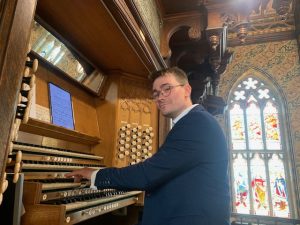
Alex Fishburn who remembered with affection playing here ten years previously, as a teenager. His enthusiasm was clear in his performance and introductions, which resulted in him saluting the instrument. It was great to see the promise of youth coming to fruition in his masterful playing.
From 2003 Alex was a chorister at Durham Cathedral, studying the piano and, in his final year, organ. He continued at Chetham’s School of Music before studying at the Royal College of Music. He has held many positions including Sub-Organist of Liverpool Cathedral.
Now a freelance musician, he combines his work at Henry Willis & Sons with concerts and accompaniment work around the North-West.
Outside of music, Alex’s interests include change-ringing, history and architecture.
He suited his programme to Rochdale’s renowned instrument well – Elgar’s mighty Sonata in G (Opus 28) received poor reviews at its first airing but in the Great Hall’s splendour the JJ Binns’ ‘mighty beast’ revealed its true glory. A majestic Allegro Maestoso got everyone’s attention, followed by a more relaxed and tuneful Allegretto. The Andante Espressivo had broad sweeping melodies so typical of the later Elgar whilst the Presto was brisk and jaunty.
Robert Schumann’s Four Sketches for Pedal-Piano (Op. 58) were interesting adaptations for organ of music for the unusual pedal-piano that explored colourful registrations.
Two wonderful numbers by Alexandre Guillmant followed from his Opus 15, the attractive Interlude in F and March on a Theme by Handel, making full use of the orchestral colours of our civic instrument.
Pierre Cholley’s Rumba sur les Grands Jeux was a riotous foot-tapper and its vigorous development of the countermelody steamed close to the fairground. Great fun.
An extra treat, dedicated to an old friend, the late David Birch, an ORTOA committee member, A Song of Sunshine by Hollins proved a poignant encore.
Given his association with the instrument and ORTOA, not to mention his fine playing, Alex was a highly appropriate performer to round off a successful mini season of Tuesdays at One!
Keep an eye on future times and days when the town hall and ORTOA find the best fit amongst so many other fantastic events at the town hall.
With thanks to Dr. Joe Dawson for permission to publish his article.
Wednesday 23 July 2025 at 2 pm -Jonathan Scott Summer Organ Spectacular.
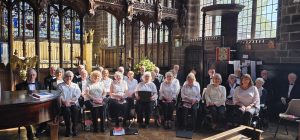
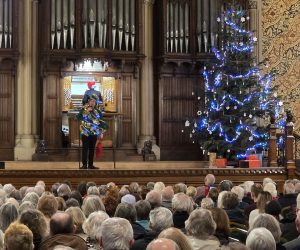
If anyone deserves the title of superstar in the world of organ music, it is Jonathan Scott. As shown in the picture, the hall was packed at 2 pm on a Wednesday afternoon in July.
Trained at Chetham’s and the RNCM, USA and the Netherlands, Jonathan, now Associated Artist at the Bridgewater Hall also gave a live organ solo BBC Prom last year at The Royal Albert Hall.
What is more, Jonathan is one of the best players to present a programme that makes the most of Rochdale’s JJ Binns instrument, as he knows it so well and he is a skillful arranger choosing appropriately from a wide repertoire. He is one of those rare performers who has consummate ability and a popular touch able to engage readily with an audience. He skillfully introduced and guided us through the varied sounds and combinations at his disposal.
We began with Elgar’s Pomp and Circumstance March no. 4 using all of the instrument’s orchestral qualities. Followed by Handel’s Passacaglia from Suite No. 7, with the original harpsichord music adapted to great effect. Then the Italian countryside was gloriously painted, complete with a convincing storm, in Vivaldi’s Summer concerto from the Four Seasons. In contrast, we had the calm of Saint-Seans’ beautiful aria from Samson and Delilah.
Mendelssohn’s Scherzo from A Midsummer Night’s Dream and Holst’s Jupiter from the Planets again revelled in orchestral colour, epitomizing the town hall organ’s capacity to bring the sounds of the concert hall or opera house to the people.
More Handel, from his Ode for the Birthday of Queen Anne also gave Jonathan the opportunity to point out the stained-glass portraits of British Royalty that surround the Great Hall, commenting that we had an outstanding instrument in an equally outstanding building.
The magnificent Widor Toccata crowned it all, incidentally, the only piece that wasn’t arranged by Jonathan.
An exquisite rendering of Puccini’s aria O mio babbino caro was a well-deserved encore that made a summer spectacular in so many ways.
You can see him again on 17 December 2025 for his Christmas offering. Book now to be sure of a place!
Jonathan is also the Honorary President of ORTOA (Oldham, Rochdale and Tameside Organists’ Association founded 1908) who continue their mission to promote organ music and the town hall instrument next on Tuesday 16 September at 1 pm Alex Fishburn (Liverpool Cathedral).
With thanks to Dr. Joe Dawson for permission to publish his article.
Tuesday 15 July 2025 at 1 pm – LEE LONGDEN Cinema Organist.
Rochdale’s internationally renowned Binns organ at the town hall was the star of the show in this delightful showbiz concert.
Lee Longden, a classically trained organist, pianist and conductor, branched out into jazz and popular music, and enjoyed a professional career as a performing musician and Musical Director. His work took him to many parts of the world, performing on land and at sea, in concert halls, theatres and cabaret and broadcasting on radio and television.
Lee returned to his first love today as a concert theatre organist after recovering from an illness. His engaging and enjoyable programmes are widely appreciated for their accessibility, variety and quality. Today was no exception.
He was delighted to have been invited to demonstrate Rochdale’s renowned civic organ’s great versatility. He said that he ‘believed the Binns turns its hand to anything’!
Although it does not have the bells and whistles or sound effects of a mighty Wurlitzer, nor does it rise through the floor, Lee used his considerable theatre and cinema skills to orchestrate imaginatively and make the most of the amazing instrumental colours and terrific bass stops. The musical choices and introductions were equally witty.
It was a case of no business like show business as famous Studio marches instantly propelled us into the world of cinema. Shirley Bassey’s Greatest Hits (entitled Shirley is Forever, as in Diamonds, get it?) had great rhythmic vitality and stirring bass and, A Walk in the Black Forest, and a Bossa Nova Selection had everyone’s feet tapping involuntarily. A Celebration of Sammy Davis Jr demonstrated superb vocal phrasing worthy of the legendary singer.
If the showbiz style was Reginald Dixon, then Lonely Ballerina was pure Mantovani and his exotic singing strings; twentieth century light music in glorious technicolour. Hollywood Blockbusters themes came thick and fast: A Bridge too Far, Pirates of the Caribbean, the Odd Couple, Born Free, Titanic, Harry Potter, the Magnificent 7, reliving those iconic cinematographic thrills. All we needed was the popcorn and interval choc ice.
This feast of movie magic came from the same musician and instrument just as capable of the gravitas of sacred or serious music of JS Bach or Widor’s Toccata – no wonder organists want to come and play Rochdale’s JJ Binns organ, a beacon of Greater Manchester’s Town of Culture 2025/6.
The sustained spontaneous applause from a delighted audience proved that this was an hour to remember – when the majestic giant clicked its heels.
With thanks to Dr. Joe Dawson for permission to publish his article.
This April marks 200 years since the Lancashire Weavers’ Uprising and the Chatterton Massacre – a powerful moment in our region’s history when thousands stood together against starvation and injustice.
Join the Weavers Uprising Bicentennial Committee (WUBC) throughout 2026 for walks, exhibitions, talks, family events and the major bicentennial commemoration on Sunday 26 April at Chatterton Peace Park.
The WUBC are honouring the weavers who marched from Accrington, Blackburn, Haslingden, Rossendale and beyond – and remembering those killed when troops opened fire on protestors at Aitkens Mill in 1826.
Rooley Moor Neighbourhood Forum – Annual General Meeting
You are warmly invited to attend the Rooley Moor Neighbourhood Forum (RMNF) Annual General Meeting. This year’s AGM will be held online via Zoom to make it easier for as many people as possible to take part.
Recording notice
To support accurate minute‑taking and to ensure the meeting is accessible to those who cannot attend, the AGM will be recorded. Zoom will display a notification when recording begins.
Camera etiquette
Cameras should be on for the first few minutes to help with introductions. After that, if you prefer not to appear in the recording, you are welcome to keep your camera off and participate via audio or the chat.
If you have any questions ahead of the meeting, please get in touch.
We look forward to seeing you there.
Agenda
Welcome, Introduction & Apologies
Code of Conduct
Conflicts of interest and conflicts of loyalty
To approve the Minutes of the Annual General meeting of 2024 and review the actions from this meeting.
To adopt the Accounts for the year ended 31st August 2025, and
To agree our reserves policy
Legal & Administrative Information
To approve the Reports from Trustees and Officers of the Forum
Trustee & Officer Rotation, Resignations and Appointments
Policy Update
AOB
Scout Moor II Wind Farm update
Fund raising.
Next Meeting – TBA
Please let us know if you would like to be more involved.
As a local charity we are looking for new trustees to join at our AGM. We particularly want to hear from local people with the time, interest and skills who can help our charity meet its objectives.
For more information, please email the Forum Secretary at: info@RMNF.org.uk
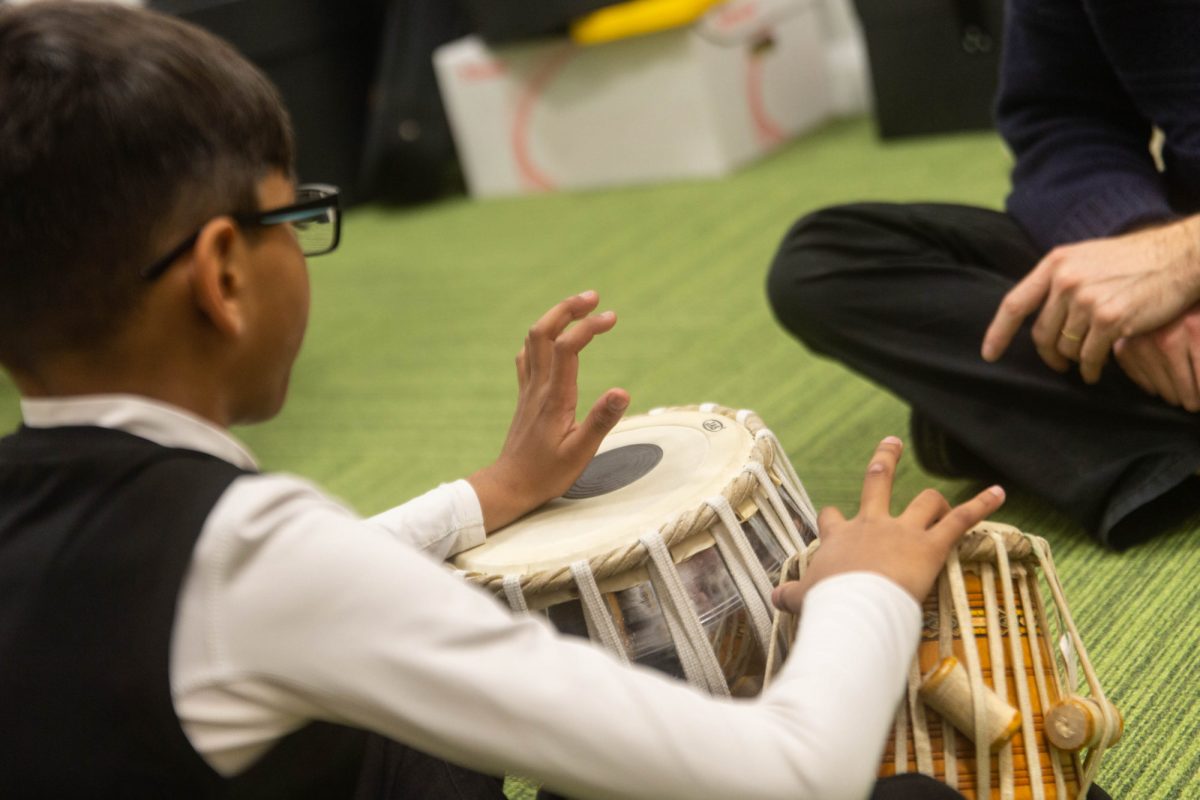
Music for the Many is a charity founded in 2018 to provide instrumental tuition and other musical opportunities to children in our area. For more information see https://music4themany.com
Todmorden Folk Festival is presenting the annual youth music award competition on 30th January. The official closing date was last Friday, although we understand that late entries are welcome if you’re quick! Here’s the information: https://www.todfolkfest.co.uk/tff-youth-music-awards/
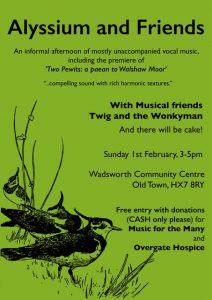
Our choir friends, Alyssium, are doing a concert on Sunday 1st February at 3pm at Wadsworth Community Centre, Old Town, HX7 8RY. It’ll be a lovely, fascinating concert of contemporary acapella vocal music and it’s all in aid of Overgate Hospice and Music for the Many.
Music for the Many (registered charity 1185526) is funded by your donations. You can make a one-off donation or set up a standing order of as little as £2 per month at www.justgiving.com/musicforthemany
Community groups Rooley Moor Neighbourhood Forum (RMNF) and Say No To Scout Moor 2 (SN2SM2) have raised serious concerns following Manchester Friends of the Earth’s decision to support the proposed Scout Moor II wind farm – a development they say would industrialise a sensitive upland landscape, damage deep peat, and undermine public confidence in environmental decision‑making.
Commercial Interests Framed as Climate Action
RMNF and SN2SM2 argue that the proposal is being driven more by commercial incentives than climate necessity. They point to recent public discussions – including Martin Lewis’s interview with Greg Jackson, CEO of Octopus Energy – that highlighted how heavily subsidised renewable operators can generate substantial profits without guaranteeing lower bills or wider public benefit.
“Communities are entitled to ask who really benefits from the industrialisation of Rooley Moor – local people, or private investors,” the groups say.
Deep Peat Excavation and Carbon Loss
The development would require excavating areas of deep peat and blanket bog – among the UK’s most important natural carbon stores. The developer’s own surveys, alongside DEFRA’s England Peat Map, confirm extensive peat across turbine locations and access routes.
RMNF and SN2SM2 note:
restoration is not equivalent to preservation
disturbing peat releases stored carbon that cannot simply be “put back”
concrete turbine bases would remain permanently in an acidic environment
the land’s condition reflects historic under‑management, not ecological worthlessness
there is no enforceable mechanism guaranteeing long‑term restoration
“Destroying a natural asset in order to justify restoring fragments of it is not environmentalism,” they say. “It is industrialisation presented in green language.”
Statutory Silence Is Not Environmental Assurance
Manchester FOE’s position relies heavily on the absence of objections from statutory consultees. RMNF and SN2SM2 caution that non‑objection does not equate to endorsement, nor does it represent a full assessment of cumulative harm.
“Statutory bodies operate with limited resources and narrow remits. Their silence cannot be used as a proxy for ecological safety.”
A Consultation Process That Left Communities Behind
Residents across Rossendale and Rochdale have repeatedly raised concerns about:
inaccessible or contradictory documentation
late publication of key materials
unclear cumulative impact assessments
limited opportunities for meaningful dialogue
The Aarhus Convention requires effective public participation, not simply the existence of exhibitions or leaflets.
“People feel this is a done deal, with the process focused on delivering policy targets rather than listening to communities,” the groups say.
Cumulative Impacts Overlooked
The existing Scout Moor wind farm has already caused ecological and social pressures, including illegal motorised vehicle access, antisocial behaviour, and unmanaged erosion. Campaigners argue that expanding the scheme without addressing these issues is irresponsible.
“It is impossible to justify further industrialisation when the impacts of the existing development have not been monitored or mitigated.”
Rooley Moor: A Valued Landscape
Rooley Moor is:
a historic and cultural landscape
a public amenity
a carbon store
a biodiversity refuge
an area of common land (Section 193 Urban Common)
a working upland landscape supporting local farming and the local food chain
“This is not a blank canvas for industrial expansion,” the groups say.
Correspondence Raises Further Questions
RMNF and SN2SM2 have raised these issues directly with Manchester FOE. Their written exchange (available to journalists on request) shows FOE’s support relying heavily on developer‑led narratives and the assumption that peatland destruction can be justified by future restoration.
“Peat lost to excavation and oxidation cannot simply be reinstated. No credible scientific explanation has been offered to suggest otherwise.”
A Call for Integrity in Environmental Support
RMNF and SN2SM2 believe FOE’s position does not reflect the ecological realities of the site or the concerns of the communities who will bear the consequences.
“True environmentalism demands more than supporting any project labelled ‘renewable’. It requires scrutiny, honesty, and a commitment to protecting irreplaceable landscapes.”
The groups are calling for a more balanced, evidence‑based dialogue that reflects the full ecological, social, and procedural realities of Rooley Moor.
To approve the Minutes of the Annual General meeting of 2024 and review the actions from this meeting.
To adopt the Accounts for the year ended 31st August 2025, and
To agree our reserves policy
Legal & Administrative Information
To approve the Reports from Trustees and Officers of the Forum
Trustee & Officer Rotation, Resignations and Appointments
Policy Update
AOB
Scout Moor II Wind Farm update
Fund raising.
Next Meeting – TBA
Please let us know if you would like to be more involved.
As a local charity we are looking for new trustees to join at our AGM. We particularly want to hear from local people with the time, interest and skills who can help our charity meet its objectives.
For more information please email the Forum Secretary at: info@RMNF.org.uk
Rooley Moor Neighbourhood Forum – Annual General Meeting
You are cordially invited to attend our Annual General Meeting on Friday, 30 January 2026, starting at 7:00pm.
This year’s meeting will be held online via Zoom and will last approximately 30 minutes. The meeting link will be circulated a few days beforehand.
Agenda
Welcome, Introduction & Apologies
Code of Conduct
Conflicts of interest and conflicts of loyalty
To approve the Minutes of the Annual General meeting of 2024 and review the actions from this meeting.
To adopt the Accounts for the year ended 31st August 2025, and
To agree our reserves policy
Legal & Administrative Information
To approve the Reports from Trustees and Officers of the Forum
Trustee & Officer Rotation, Resignations and Appointments
Policy Update
AOB
Scout Moor II Wind Farm update
Fund raising.
Next Meeting – TBA
Please let us know if you would like to be more involved.
As a local charity we are looking for new trustees to join at our AGM. We particularly want to hear from local people with the time, interest and skills who can help our charity meet its objectives.
For more information please email the Forum Secretary at: info@RMNF.org.uk
Increased Risk of flooding for “Rochdale’s Chernobyl” from the proposed construction of Scout Moor 2
Following recent National Press coverage in the MailOnline of the problems at the old Turner Brothers Asbestos (TBA) Site in Rochdale, we are highlighting the potentially catastrophic health risks that could be caused by flooding of the TBA site brought on by Cubico’s proposal to erect 17 x 180m turbines on ancient peat moorland.
Turner Brothers Asbestos (TBA) in Rochdale started operating in the nineteenth century. The company’s industrial-scale production of asbestos cloth and yarn meant they processed a variety of asbestos types to create their goods, though Chrysotile is noted as being the most common type found in buildings. The company also handled blue (Crocidolite) and brown (Amosite) asbestos which were banned in the UK in 1985. Through the years, their products included:
Chrysotile (white asbestos): The most common type of asbestos, used for products like insulation, and in textiles like cloth and yarn.
Blue asbestos (Crocidolite): Used in cement products, insulation, and brake linings. The use of this was banned in the UK in 1985.
Brown asbestos (Amosite): Used in cement products, pipe insulation, and as a fireproofing agent. The use of this was banned in the UK in 1985.
TBA – later Turner and Newall – was the world’s largest asbestos company and owned mines in Canada and southern Africa alongside its factories in the north of England, where the mineral was processed into a spun yarn, cloth, and other asbestos-containing materials. The dangers of the mineral were unknown when it first opened in the mid-Victorian era, but in 1924, employee Nellie Kershaw became the first person in the UK to have been found to have died from asbestosis. She died on March 14, 1924, aged just 33 years. Her death led to the Asbestos Industry Regulations 1931, the world’s first laws relating to the mineral.
The manufacture of asbestos began on the site in 1879. By 1970 the factory had an annual output of 2,250,000 yards of asbestos cloth and 5,500,000 miles (8,900,000 km) of asbestos yarn. During production in the 20th Century, asbestos was allowed to enter the atmosphere around the factory by way of extractor fans which extracted dust from the factory floor. The factory produced tonnes of asbestos waste each week which had to be disposed of. Even though the site at Rochdale has long since been closed and the manufacture of any asbestos containing products stopped in the 1990’s, the legacy of the TBA factory in Rochdale continues to cause fear for residents who worry about the amount of asbestos left on site and in the surrounding area from the many years of production.
Most asbestos materials were banned in the UK in 1985, with a complete ban following 14 years later. The firm went out of business in 1998. The land in Rochdale, which housed TBA, was bought by ESG Trading. ESG chairman Martin Greenwood said it would ‘decontaminate, demolish and remediate’ the 111-acre site before putting forward any plans for it. Planning applications to build 600 homes on the land were thrown out by Rochdale Council in 2011 following a six-year battle by campaigners who feared people’s health could be put at risk. Three developers have come and gone since then and the current site owners, Spodden Park Ltd, are again planning to redevelop the area. Local residents and campaign groups, such as ‘Save Spodden Valley’, remain concerned about the health risks associated with any disturbance of the site during any future development. They advocate for complete transparency and rigorous independent testing. It is the remains of this industry which worries residents today. Asbestos waste was buried on site and allowed to contaminate the area surrounding the factory. Locals fear that any disturbance would expose current and future residents and visitors to asbestos.
Increased risk of disturbance by flooding
If the former TBA site flooded, a major concern would be the potential disturbance, uncovering and spread of buried asbestos waste, which could both during and after a flood release microscopic fibres into the air and water. This could have severe health implications, as inhaling asbestos fibres is a major cause of respiratory diseases such as asbestosis and mesothelioma. If the Scout Moor 2 wind farm application was approved, the risk of flooding would increase significantly. Increased flooding risk for the former TBA site (now part of the broader Spodden Valley area in Rochdale) would primarily be through the proposed excavation of the upland peatlands for wind turbine and other ancillary installations, road building for access over peatland, and decommissioning activities after the wind turbines’ approximate 25-year lifetime, all of which involve major drainage and excavation of deep peat. This would not only affect the peat’s carbon sequestration capacity, releasing carbon stored in these blanket bogs over millennia, but would also negatively impact biodiversity and ecology, harming and driving away wildlife from our local blanket bog ecosystems forever, and would cause disruption to the local terrain’s hydrology and essential water cycles, resulting in loss of flood resilience for our communities.
Key concerns about flooding risks
Risks identified by campaign groups and local residents include:
Peatland Damage: Peat acts as a natural sponge, absorbing and storing vast amounts of water and releasing it slowly. Digging up the peat for concrete foundations and other infrastructure would compromise its natural water management functions, leading to faster surface water flow and increased runoff after heavy rains.
Climate Change: Ecosystems like peatlands absorb large amounts of carbon dioxide, which is how peatlands, like the rainforests, are helping to mitigate climate change and reach net zero. Peatlands are the world’s largest natural asset on land for carbon capture with more than twice the carbon stored in all the world’s forests . . . and four times as much as in the atmosphere. Our globally rare blanket bogs on this proposed Scout Moor 2 site contain large amounts of carbon which, when disturbed, massively contribute to greenhouse gas emissions. Just one hectare of peatland can contain 5,000 tonnes of carbon that starts to be released into the atmosphere when wind turbines are installed. The recently produced Natural England Peat Map evidences that this area proposed for Scout Moor 2 contains some of the deepest peat in England. The deeper the peat, the more carbon will be emitted during construction, which also rapidly decomposes the peat and creates large holes in the land. As the surrounding peat drains into the holes, the peatland dries out and is irreparably destroyed, huge quantities of carbon dioxide are released and scope for unprecedented local disasters is created including increased frequency and intensity of extreme weather events, such as heavy rainfall, rising water levels, peat bog slides and flooding.
Altered Drainage: The construction of miles of access roads and massive turbine bases would disrupt and block historic and natural water balance would increase the volume and speed of water reaching downstream areas, such as the TBA site in the Spodden Valley.
Increased Surface Water Runoff: Replacing absorbent alkaline peatlands and with acidic materials and hard surfaces (concrete for turbine bases and compacted aggregate for roads) reduces the ground’s ability to soak up water, leading to faster and greater surface water runoff.
Downstream Impact: This wind farm’s construction is proposed on upland peat moors, which naturally attenuates water flow to the communities below. Any development that disrupts this natural hydrological process can increase flood risk for downstream urban areas. The former TBA site is situated downstream in the valley alongside the River Spodden, making it vulnerable to and at risk from any changes in the upstream water flow dynamics.
Potential effects of flooding
Disturbance of waste: It is a significant environmental and public health concern that flooding could erode the soil covering buried asbestos waste, causing the material to break up, scatter, and release hazardous fibres into the environment and air. This risk is heightened by factors such as climate change, which increases the frequency and severity of extreme weather events.
Release of fibres: The water could carry the waste to new locations, and if the material dries out, it could release airborne fibres that are then carried by the wind.
Contamination of water sources: Water runoff could carry asbestos fibres into local drainage systems, rivers, and potentially underground aquifers, contaminating drinking water supplies.
Health implications from disturbance of asbestos
Inhalation of fibres: The most significant health risk is the inhalation of asbestos fibres, which can lodge in the lungs and cause serious long-term health issues.
Respiratory diseases: Inhaling asbestos can lead to:
Asbestosis – a chronic inflammatory lung disease that causes scarring of lung tissue leading to permanent lung damage.
Mesothelioma – a rare and aggressive cancer of the lining of the lungs, abdomen, or heart.
Lung cancer.
Long latency period: Symptoms of asbestos-related diseases can take many years, even decades, to develop.
Irritation and inflammation: Short-term exposure can cause irritation and inflammation of the eyes, nose, and throat.
The developer, Cubico, has stated that it is proposing a major moorland restoration scheme as part of the project, focusing on rewetting the moor and restoring native vegetation to improve habitats and reduce flood risk for surrounding communities. However, it takes 1000 years to create 1 metre of peat and, as these are ancient peatlands, local peat has been forming since the last ice age – around 10,000 years ago. Peat is an irreplaceable, non-renewable resource and local peatlands are some of our most valuable national assets and are of international importance. Our globally rare blanket bogs play a vital role in protecting local communities in so many ways. They contribute to a healthier and more resilient environment, including by reducing flood risk and improving water security. Long-term environmental degradation and increased flooding would be a major concern if the Scout Moor 2 planning application were to be approved.
More information on local concerns can be found through groups such as the Say No to Scout Moor 2 campaign and the Rooley Moor Neighbourhood Forum. The official planning documents, including detailed flood risk assessments, are being considered by Rochdale and Rossendale councils as part of the planning process. The Lancashire Flood Forum has posted a strong objection to Scout Moor 2. It states: ‘the submitted evidence overall lacks the detail the Lead Local Flood Authority requires at this full application stage to demonstrate how the development will meet appropriate standards and comply with national policy and guidance.’